Simple charging and storage habits can make a big difference in protecting your power bank and extending its battery life.

Power banks are useful for daily life, travel, school, and work. But many people do not realize that small charging habits can shorten battery life over time.
If your power bank charges slowly, loses capacity quickly, or stops working after a few months, the problem may not always be the product itself. In many cases, it depends on how you charge, store, and use it.
The good news is that you can avoid most of these problems with a few simple habits. Using the right cable, storing your power bank properly, and keeping it away from high temperatures can help it last longer.
Why Your Power Bank Does Not Last as Long as Before
Most power banks are made with lithium batteries, which are convenient for daily charging but also sensitive to heat, over-discharge, and poor charging habits.
If you often let your power bank drop to 0% or leave it fully charged for too long, battery life may become shorter over time. The wrong cable, heat, and moisture can also affect charging performance and reduce battery capacity.
That is why good daily habits matter. Taking care of your power bank the right way can help it stay safe, stable, and reliable for longer.


Common Power Bank Mistakes to Avoid
To make your power bank last longer, try to avoid these common mistakes:
Letting It Stay at 0%
Leaving a lithium battery empty for too long can make it harder to recharge and slowly damage battery health.
Keeping It at 100% Too Long
Storing a power bank fully charged for a long time is not ideal and may shorten battery lifespan.
Using the Wrong Cable
Poor-quality or incompatible cables can affect charging efficiency and may reduce long-term performance.
Heat and Moisture
High temperatures and damp environments can affect charging performance and reduce battery capacity over time.
Keep Your Power Bank at a Healthy Battery Level
If your power bank runs out of battery, recharge it as soon as possible instead of leaving it at 0% for too long. When a lithium battery stays empty for a long time, it may become harder to recharge and its battery health may slowly decline.
However, keeping your power bank at 100% for a long time is not ideal either. If you do not plan to use it for a while, store it at around 40% to 60%. This can help protect battery health during long-term storage.
Remember to recharge it slightly every few months. This small habit can help keep your power bank in better condition when you need it again.
KATAK 10,000mAh 22.5W Power Bank
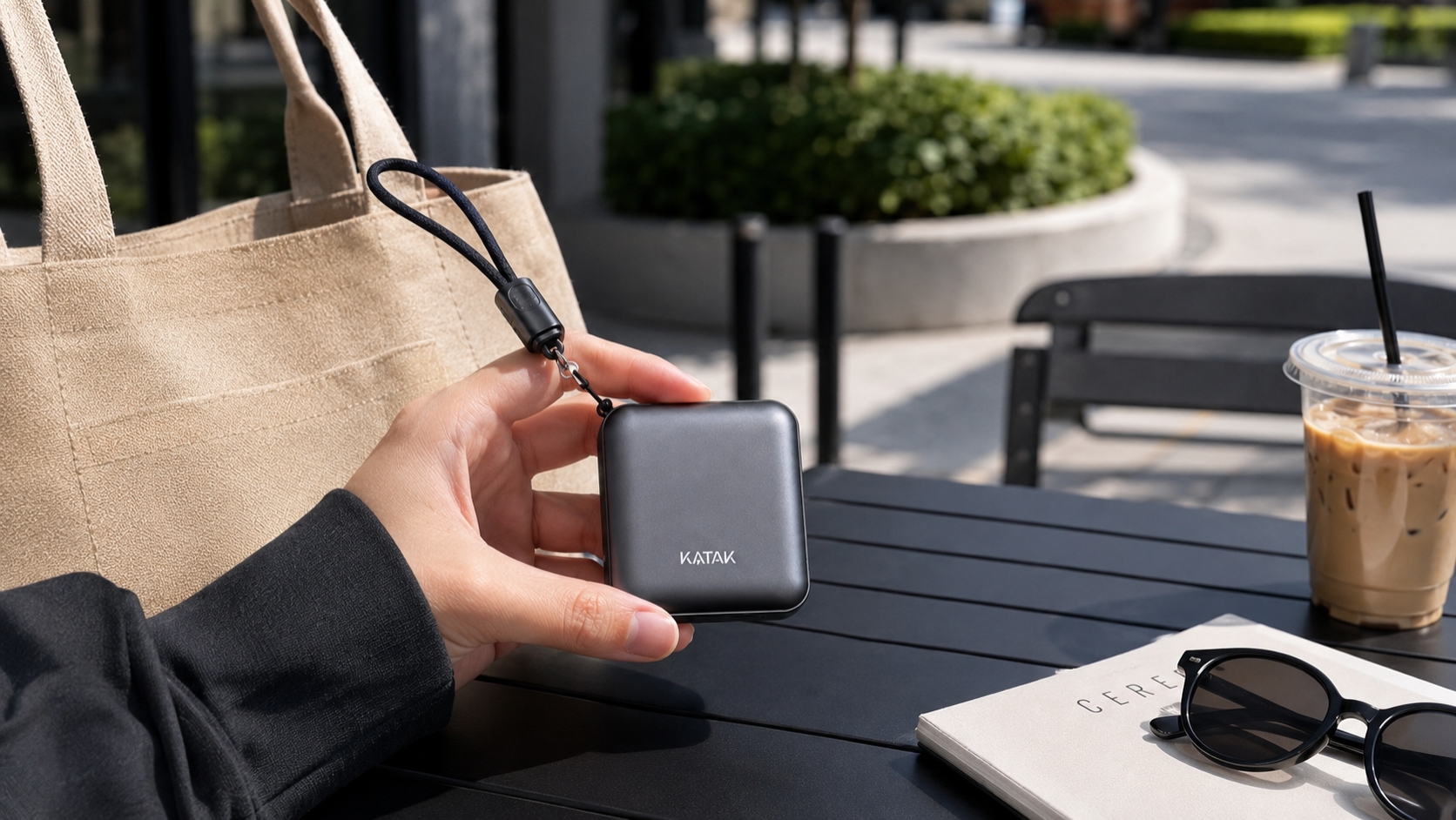
Choosing a reliable power bank is just as important as using it correctly. KATAK PK13 is made for everyday charging, from school and work to travel and outdoor activities.
It has a 10,000mAh capacity for daily phone charging. With 22.5W fast charging, it helps your phone power up faster.
The built-in cable can also work as a carrying strap, so you do not need to worry about forgetting your cable. It supports Type-C charging and is easy to carry every day.
With a compact 163g body and aluminum alloy texture, it is practical for daily use.
If you need a portable charger that is simple, practical, and easy to carry, the KATAK power bank is a good choice for daily use. It helps keep your devices powered during school, work, travel, and outdoor activities.
View KATAK Power Bank
Leave a Reply