Does Fast Charging Heat Up Phones and Power Banks?

Yes. Fast charging can make a phone, charger, cable or power bank feel warmer because more electrical power is transferred in less time. Mild warmth is usually normal, but charging should stop if a device becomes uncomfortably hot, swells, smells unusual, discolors, smokes or repeatedly interrupts charging. This guide explains why fast charging creates heat, what normal warmth means and when heat may signal a problem.
Why Fast Charging Generates More Heat
1. Higher Power Delivery
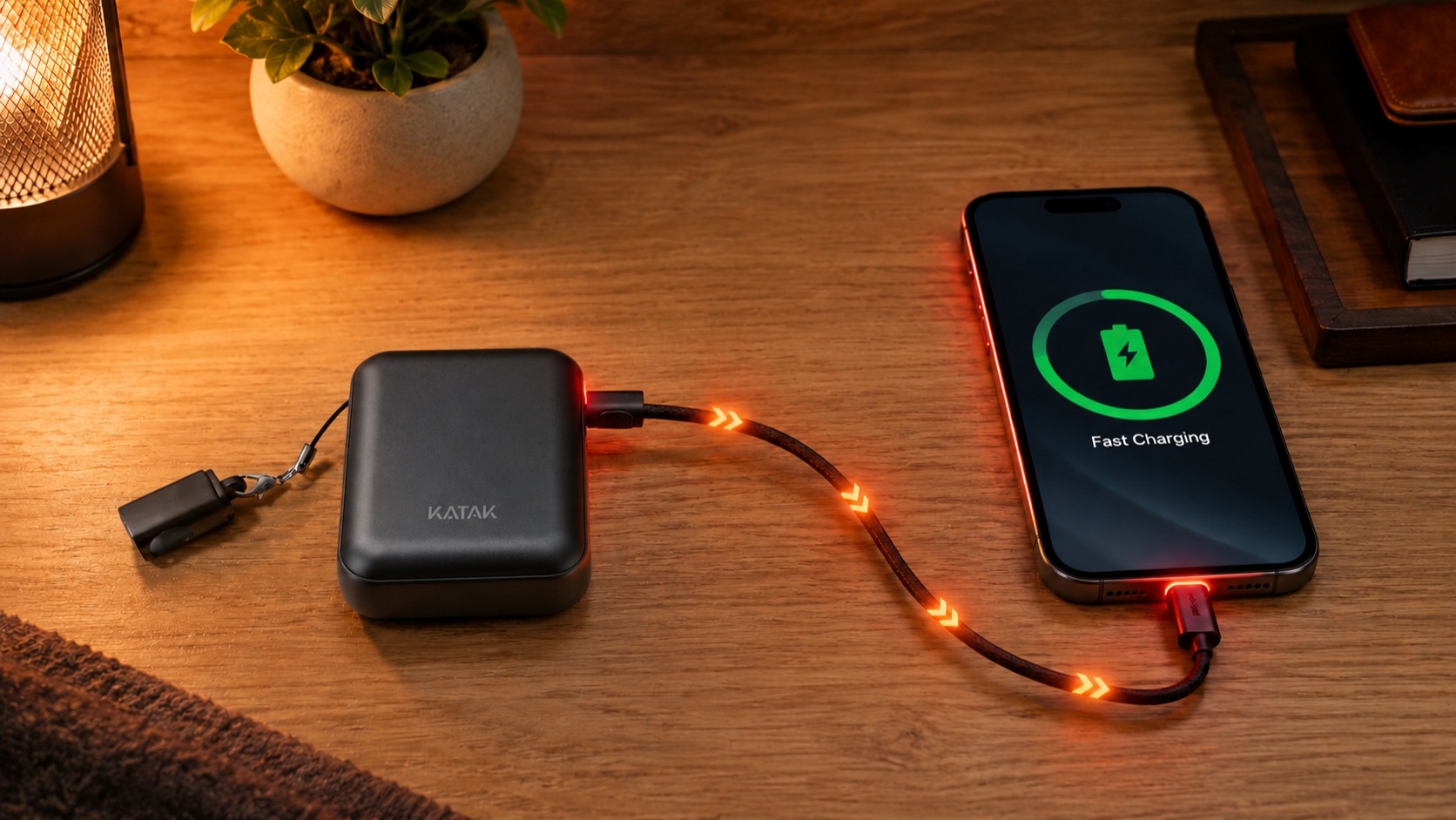
Fast charging delivers more power to your device in a shorter amount of time. Compared with standard charging, a fast charger or fast-charging power bank transfers energy at a higher rate, allowing your phone to recharge more quickly.
Because more energy is transferred within the same period, the phone, charging cable, wall charger, and power bank may become warmer than they would during regular charging.
2. Energy Loss During Charging
Not all the electricity supplied by a wall charger or power bank is stored in the phone battery. As energy moves through the charging source, cable, charging circuit, and battery, a small amount is naturally converted into heat.
The amount of heat produced depends partly on how efficiently the charging source, power bank, cable, and internal components transfer and convert energy. Electrical resistance and conversion losses cause some of the energy to become heat instead of being stored in the battery.
The design and quality of the power bank, charging cable, battery cells, and internal circuits can also affect how much heat is produced.
3. Less Time for Heat to Dissipate
Standard charging transfers energy more slowly, giving the phone, wall charger, or power bank more time to release heat through its surface.
A fast-charging power bank transfers energy at a higher rate, so heat may build up faster than the phone or power bank can release it. This can cause the surface temperature to rise more quickly.
This is one of the main reasons your phone and power bank may feel noticeably warmer during fast charging.
Is It Normal for a Phone or Power Bank to Get Warm?
A phone or power bank feeling slightly warm during fast charging is usually normal.
When Fast-Charging Heat Is a Warning Sign
You should stop charging if the device becomes uncomfortably hot to touch, repeatedly stops charging, or remains unusually hot after it has been disconnected.
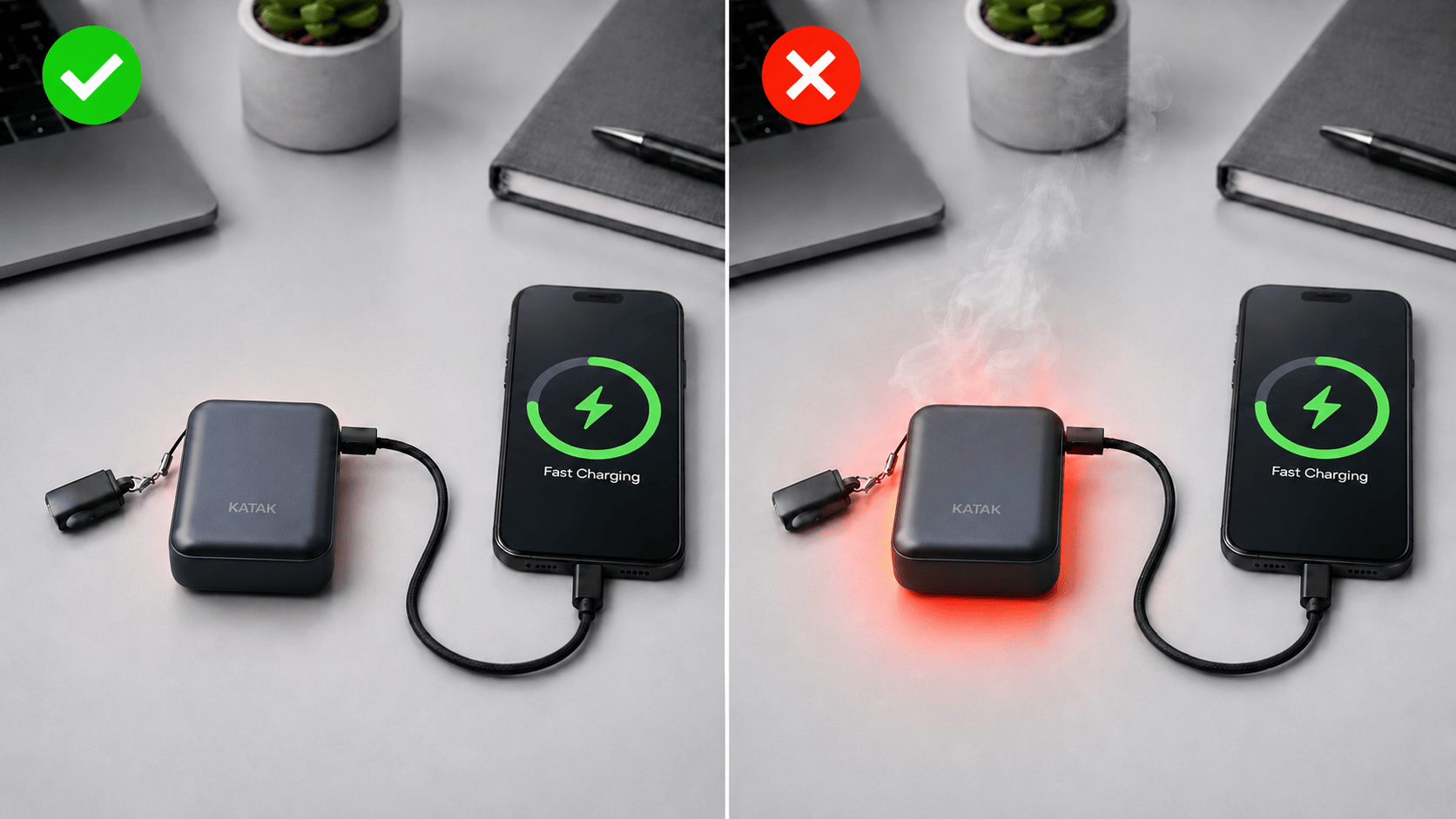
You should also stop using the device if you notice swelling, discoloration, an unusual smell, smoke, or damage around the charging port. Disconnect the charging source, place the device in a safe and well-ventilated area, and have it inspected before using it again.
Slight warmth is usually normal. Uncomfortable heat, swelling, smoke, an unusual smell, or repeated charging interruptions are warning signs.
How to Reduce Heat During Fast Charging
Excessive or prolonged heat may affect battery performance and lifespan over time. To reduce unnecessary heat, use a compatible charging source and cable, keep your phone and power bank uncovered while charging, and avoid charging in direct sunlight, inside a hot car, or near other heat sources.
KATAK PK13: A Practical Choice for Everyday Charging
Some warmth during fast charging is normal and cannot be completely avoided. However, the materials, internal design, and charging management of a power bank can influence how heat is handled during use.
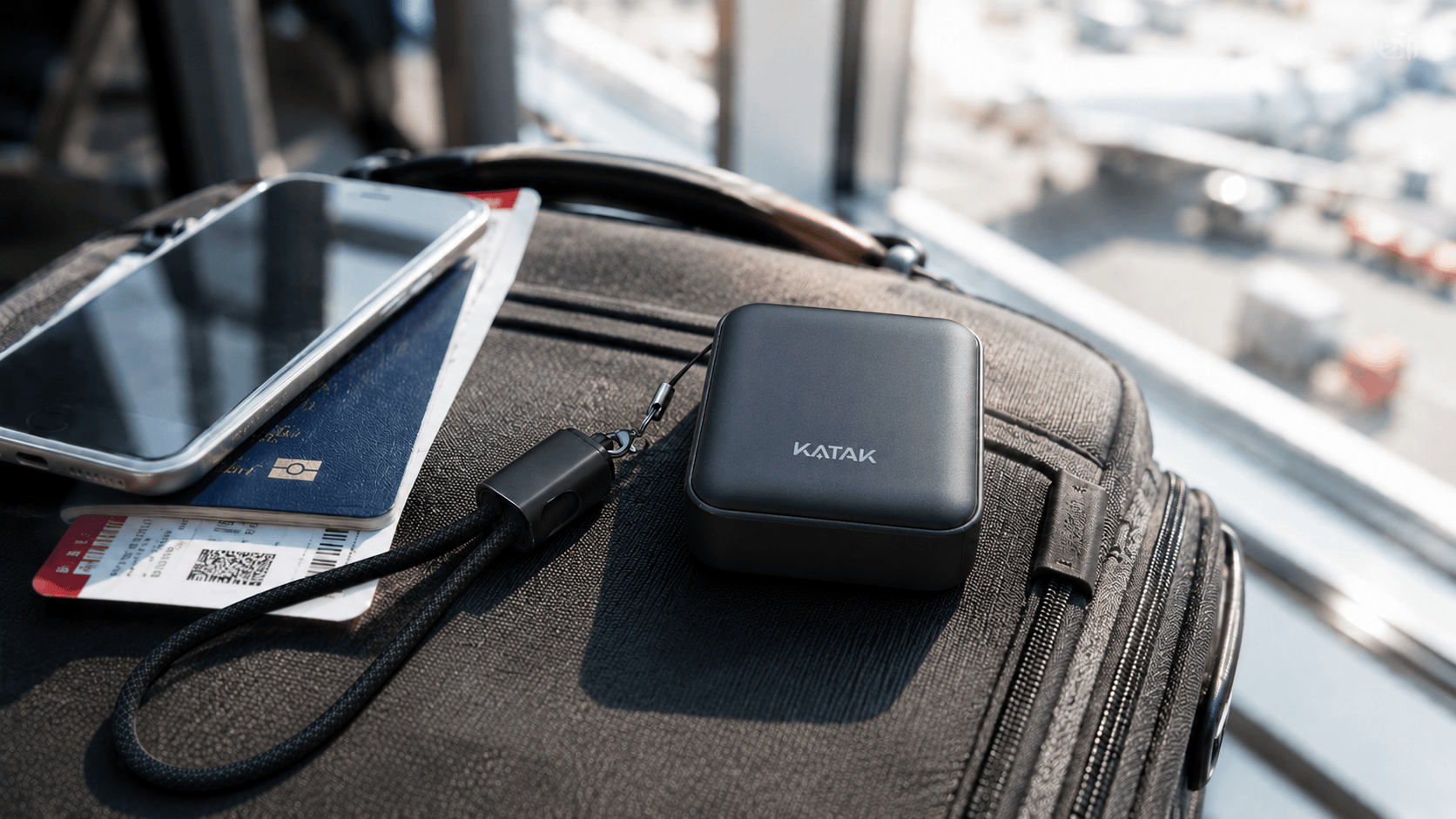
The KATAK PK13 supports up to 22.5W fast charging and has a 10,000mAh capacity, providing convenient backup power when you need to recharge your phone away from a wall outlet.
It also features a detachable USB-C cable that doubles as a carrying strap, reducing the need to carry a separate cable for everyday charging.
Its zinc-alloy casing provides a solid and durable exterior while helping distribute surface heat more evenly. Compact and easy to carry, the PK13 is designed to balance charging speed, portability, and everyday convenience.
FAQ About Fast-Charging Heat
Does fast charging make a phone hot?
Fast charging can make a phone feel warmer because it receives more power in a shorter time. Mild warmth is generally normal, but uncomfortable or persistent heat should be investigated.
Why does a power bank get warm while charging?
Some electrical energy is converted into heat as power moves through the battery cells, charging circuit and cable. Charging power, efficiency, ventilation and surrounding temperature can all affect surface warmth.
When should I stop charging?
Stop charging if the phone or power bank becomes uncomfortably hot, repeatedly interrupts charging, swells, discolors, produces an unusual smell or shows smoke or port damage.
How can I reduce heat during fast charging?
Use compatible charging equipment, keep the phone and power bank uncovered and ventilated, and avoid charging in direct sunlight, a hot car or near another heat source.
Normal Warmth vs Warning Signs
Some warmth during fast charging is normal and does not necessarily mean that your phone battery or power bank is being damaged. Modern smartphones, wall chargers, and power banks are generally designed with safety features that help monitor temperature and adjust charging power when necessary.
If a device becomes uncomfortably hot, repeatedly interrupts charging, or shows signs such as swelling, an unusual smell, or discoloration, disconnect it and stop using it until it has been properly inspected.
For compatible portable charging options, explore KATAK fast-charging power bank products.
Leave a Reply